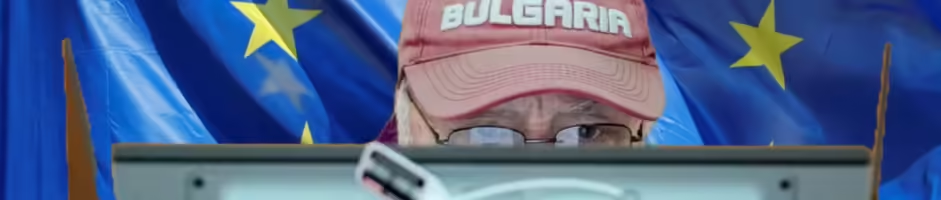
EU Elections. New EU citizens priorities: security and defence in the spotlight
Europe’s defence and security has become the main concern of political parties and citizens. All electoral programmes contained proposals on this issue.
The cost of living crisis in Europe has been one of the most pressing concerns since 2021. Several measures by the national governments and the EU have failed to provide relief to the citizens. The main cause behind it is the divided approach of the political parties to handle the situation. Right wing parties favour competitiveness while the left argue for investment in public enterprises. For this economic crisis to be effectively dealt with, parties need to rise from their differences and work as a union to lift its people from economic and social insecurities.
While the Ruling coalitions in France and Germany saw poor results, voters in Italy and Poland gave a vote of confidence to their governments.
The Bulgarian spiral of political instability continues. The impact of uncertainty within the fragmented political landscape on Schengen and Eurozone aspirations.
The defence has become a key issue for the EU. After Russia’s invasion old needs have resurged. The EDIS sets the defence industrial policy.
While Spain has made progress protecting women, young girls remain vulnerable.
President Nauseda won re-election, yet he has little time to celebrate as Lithuania must continue to prepare for potential Russian aggression.
Central Asia is a vast and resource-rich region situated between three major centers of influence. Formerly part of both the Russian Empire and then the Soviet Union, its nations have only recently gained independence following the dissolution of the Soviet Union. They continue to be influenced by Moscow, although they have made some significant strides towards autonomy in their own right. The Russian military’s actions in Ukraine have continuously eroded the credibility of the Collective Security Treaty Organization (CSTO), a Russian-led military alliance. This, coupled with a significant loss of soft power in the countries of the post- Soviet space, which traditionally formed part of its sphere of influence, could create an opening for other influential actors to emerge as real alternative partners. The European Union wishes to consider an even more proactive role in Central Asia, given the young nations’ of Central Asia newfound pragmatism in foreign policy and its potential to enhance EU interests.
Slovak Prime Minister survived an assassination attempt, yet Slovak democracy is still on life support.
This text explores the recent success of the far-right in different national elections in Europe to try and determine whether this might translate into a far-right “wave” at the next EU parliamentarian elections.