


- The European Union in the Arctic: objectives and challenges - 19 January, 2026
- Italian regional elections: a test for Meloni’s government? - 14 November, 2025
- Sanctions and Strikes: Consequences over Russia - 3 November, 2025

Introduction
The season of fall 2025 is signing an important mark for the Far-Right Italian government led by Giorgia Meloni. On October 22, it reached the goal of being in charge for three years sharp and in the same month it became the third longest Italian republican government. Moreover, in this season starts the “budget law term”. This is a period of more than two months of ongoing parliamentary discussion about the mandatory approval of the annual budget law.
But first and foremost, the occurring regional elections are shaping the political landscape. In 2025, from September to November, people from six different regions will participate to the vote for the renewal of Regional Councils and the President of the Region. This last one is also known as “Governor” politically, even if this substantive is incorrect juridically. The regions involved in this election cycle are Marche, Calabria, Tuscany, Apulia, Veneto, Campania and Aosta Valley, but the last one follows a different path in the elections, due to its special status.
This type of election can constitute both a threat to the government and a “political barometer” for the executive. In the first case, if the government coalition suffer losses in key region, this could provoke turmoil amidst the Right parties in charge. On the other hand, the elections are useful to notice how the people respond to stimulus coming from both the government and the opposition. In this regard, the center-left could use these elections as an experiment of a possible national coalition with a view to next parliamentary elections. Nevertheless, despite increasing regionalism indicators lead to continuity instead of change.
Italian regions: why do they matter?
The debate concerning the Italian regional system has its roots within the meetings of the Constituent Assembly, between 1946 and 1948. Once the Constitution entered into force, it appeared a new form of State that it was regulating. In the first place, the intention was to overcome the precedent centralized fascist regime organization. In doing so, the Constitution exhorted the Parliament to constitute the regions officially, towards the emanation of an Act. Even though this prescription, the Parliament approved a law for the creation of regions only in the 1970.

Since then and until the end of the century, the so-called “Ordinary Statute Region” (which differ from the “Special Statute” ones, briefly Sardinia, Sicily, Aosta Valley, Friuli-Venezia-Giulia and Trentino-Alto Adige) found their legal bases in an incoherent body of law. The regional powers were weak, and the constitutional provisions were not in favour of the “regionalisation” of the Republic.
When the “First Republic” system was shoot down in the early 90s, a new momentum for regionalism began. Indeed, the rising of a federalist party (the former Lega Nord, North League) during the 80s, its presence in the first government of Silvio Berlusconi and the influence that the federalist view was having on Italy, led to the 2001 constitutional reform. The “Title V” reform of 2001 represented a turning point of regionalism, because it entirely modified the constitutional basis on which upon the regions were based, granting to them legislative powers – until the reform, it was a strictly State prerogative – and confirmed the direct election system. Hence, regional bodies (the Council and the President) constituted a direct emanation of the popular will.
Since the 2001 reform, Italian regions started having prerogatives over important subjects, such as health, education and public transportation. Consequently, the political struggle to control them started to be harsher, due to the political and economic importance of overseeing them.
Meloni’s far-right government or the opposition
When the Brothers of Italy led coalition came into power after the 2022 national election, the regional issue re-emerged. Due to different views regarding the matter, within the Far-Right coalition came to an agreement: pursuing the regionalisation (withing the framework of the differentiated autonomy), promoted by the League, while fostering for the constitutional reform of the premiership, nearer to the Brothers of Italy needs. Even if the executive have made some steps forwards, the reform is still ongoing.
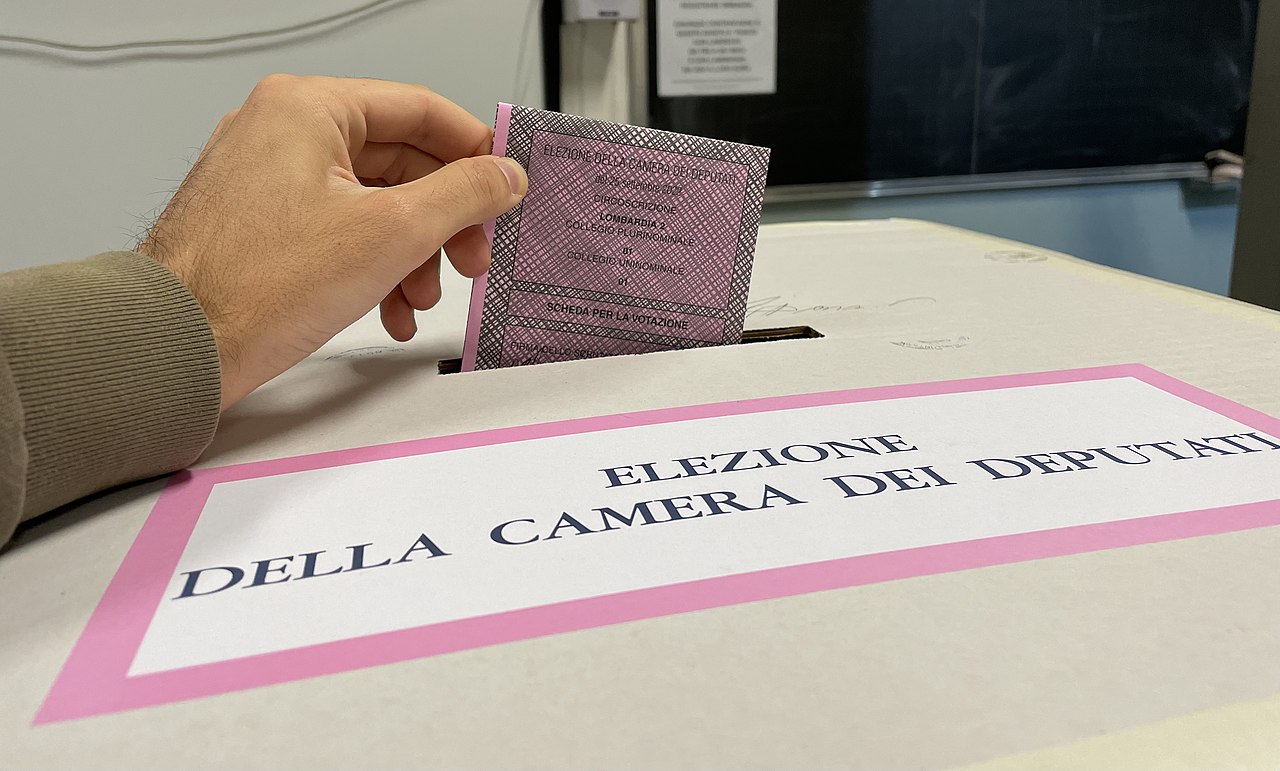
Since 2022, Meloni’s government is stable, thanks to a solid majority held in the Parliament. Even if this regional election turn come in a moment of political turmoil in Italy, mostly due to the pro-Palestinian movements and protests, it seems unlikely that the government will suffer from a possible loss in key regions. Between 2023 and 2024, elections occurred in 12 regions and the Right coalition won in 9. At the time of writing, between September and October 2025, the Right coalition won two out of three regional elections (Marche and Calabria), losing in Tuscany, traditionally considered a Left bastion.
The strength of the government is reinforced thanks to the inner problems of the official opposition. The Democratic Party seems to have succeeded in creating a coalition with the 5-Star Movement, the Greens and the Left. Although this result, polls suggest that this coalition does not still have the necessary quote to create a possible majority that could overthrown Meloni and its allies. Moreover, between the Center-Left parties there are existing differences and distances over important themes, such as the foreign policy and the energy issue. A possible Center-Left victory in Campania and Apulia – which had two of the strongest local political representatives as Presidents, respectively Vincenzo De Luca and Michele Emiliano, both from the Democratic Party – could arouse the trust within the coalition, but many doubts persist around it. Concluding, despite her controversial policy on sensitive topics, forging and solidifying a stable government in a country known for its short term governments can be attributed to heir political achievements.
Questions:
- Will the Right coalition stay in power until 2027?
- What are the main differences among the Center-Left coalition?
- Is the Center-Left coalition capable of resolving its inner controversies?
For further reading
1. Vassallo, S., & Vignati, R. (2024). Brothers of Italy and the rise of the Italian national conservative right under Giorgia Meloni. Springer. https://doi.org/10.1007/978-3-031-52189-8
2. Hanau Santini, R., & Baldaro, E. (2025). Navigating the three circles: The politics of Italy’s foreign policy under the Meloni government. Italian Journal of International Affairs (L’Italia e la Politica Internazionale). https://iris.unipa.it/handle/10447/675683
3. Wang, X. (2025). The rise of the Brothers of Italy and its causes: From a Gramscian perspective. Education, Humanities and Social Sciences, 17(2), 45–58. https://drpress.org/ojs/index.php/EHSS/article/view/18963

